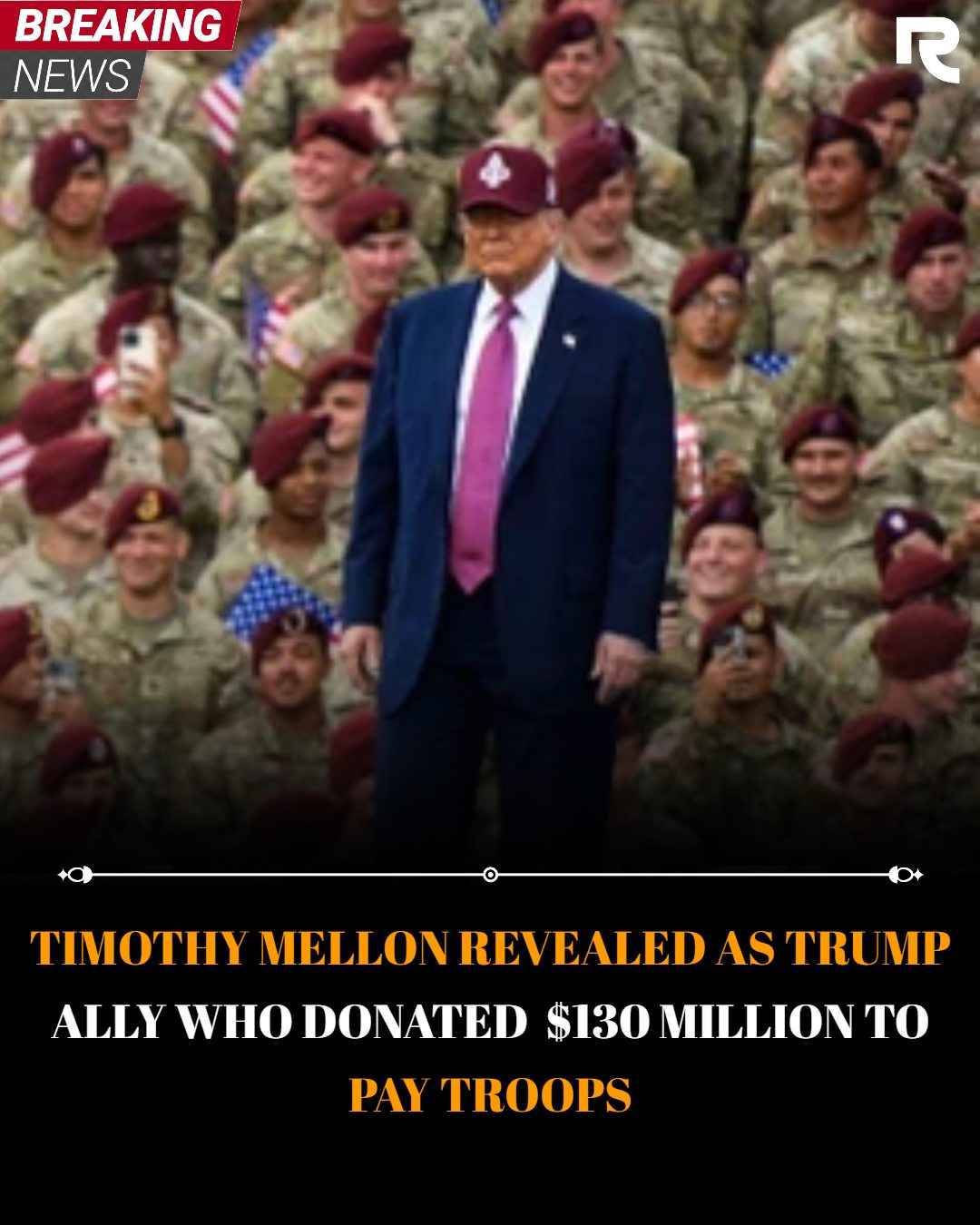
Timothy Mellon Revealed as Trump Ally Who Donated $130 Million to Pay Troops
Reports now identify Timothy Mellon, a reclusive billionaire and major Republican donor, as the mysterious benefactor behind a $130 million donation to help pay U.S. military personnel during a prolonged government shutdown. The revelation has sparked legal and ethical debates about private funding for public military payroll.
Who Is Timothy Mellon?
Timothy Mellon is an heir to the Mellon banking dynasty, a family that traces its wealth back to the early 20th century. His grandfather, Andrew Mellon, served as U.S. Treasury Secretary. Mellon has largely stayed out of the public spotlight, living a private life that includes significant philanthropic and political giving.
He studied at Yale University and later founded a transportation company. Over the years, Mellon’s public profile as a businessman has been relatively quiet, but his political donations have surged in recent years. His estimated net worth varies widely in reports, reflecting both his inherited wealth and his investments.
The $130 Million Donation: What Happened
During the recent federal government shutdown, President Trump announced that an unnamed “friend,” a “patriot,” had pledged $130 million to support active-duty service members. According to internal Pentagon officials, the funds were accepted under the department’s “general gift acceptance authority,” with the requirement that they be used specifically for military salaries and benefits.
Subsequent reporting by multiple sources revealed that Mellon is the donor. The donation works out to roughly $100 per service member, according to Pentagon spokespersons and other officials. Although significant, the amount covers only a small fraction of the Pentagon’s total biweekly payroll, which runs in the billions.
Why the Donation Is Controversial
1. Legal Questions
One of the biggest issues raised by experts involves the Antideficiency Act, a federal law that restricts government agencies from spending beyond what Congress has appropriated. The law also limits the acceptance of voluntary services or gifts, unless in narrowly defined emergency situations.
Critics argue that accepting such a large private donation to prop up military pay could violate this statute, as it circumvents the traditional congressional budgeting process. These concerns raise fundamental questions about the role of private money in funding essential government functions, especially for something as critical as military salaries.
2. Ethical Implications
Beyond legal risk, the donation prompts ethical discussion. While many may admire the gesture as patriotic, others feel uneasy about a private individual stepping in to fund public payroll. There is concern that reliance on private wealth in this way might undermine democratic accountability. If large donors can influence or support core government operations, critics argue, it could shift power dynamics in ways that challenge transparency and democratic norms.
3. Precedent and Future Impact
The use of a private donation for military payroll raises the possibility of precedent: will other wealthy individuals feel encouraged to step in where government funding falls short? If such practices become more common, it could reshape how certain public services are funded. Some worry that this could blur the lines between private philanthropy and public obligation.
Mellon’s Political Involvement
Timothy Mellon is not just a one-time donor. Over recent years, he has become a major figure in political fundraising. His contributions include large sums to super PACs and conservative causes, including direct support for Donald Trump. He is widely seen as a key financier in the modern Republican donor ecosystem.
Mellon’s political giving extends beyond Trump-aligned groups: reports suggest that he has also supported other controversial political causes, indicating that his influence spans beyond a single campaign.
Reactions from Different Sides
- Supporters: Some people view Mellon’s donation as an act of patriotism. For them, he stepped in during a crisis to ensure that U.S. service members did not go unpaid. They argue that this is a noble use of wealth, especially in a moment when political gridlock threatened military compensation.
- Critics: Legal experts and budget watchdogs warn that the donation undermines constitutional principles of spending. They contend that government functions—especially paying soldiers—should not be contingent on the goodwill of private individuals. Critics also worry about a slippery slope: if private money becomes a regular fallback, what does that mean for the role of Congress and taxpayer funding?
- Public Observers: For many, the story has become a symbol of broader concerns about money in politics. Mellon’s reclusive nature, combined with his political connections, fuels debate about how power and private wealth can influence public policy.
Broader Context
This episode is not happening in a vacuum. It reflects a growing intersection of wealth, philanthropy, and political influence in modern governance. As government gridlock becomes more common, the reliance on private interventions — whether through donations or other financial mechanisms — is raising fundamental questions about accountability, transparency, and the proper role of private citizens in supporting public institutions.
In the military context, the stakes are particularly high. Paying service members is not a discretionary program — it is a core government responsibility. The fact that a private donation was accepted for this purpose has prompted many to rethink how government funding should be structured and safeguarded.
Possible Long-Term Implications
- Policy and Legal Reform: The controversy may spur lawmakers to clarify or tighten rules around private donations to government entities, especially in areas like defense and national security. Legal constraints like the Antideficiency Act might come under renewed scrutiny.
- Donor Influence: Mellon’s donation could embolden other wealthy individuals with strong political beliefs to fund public services, particularly in times of crisis. Whether this trend grows depends on both legal frameworks and public reaction.
- Public Trust: How this story unfolds may affect public trust in government financing. If citizens see essential services being funded by private individuals, some may view it as a failure of elected officials to meet their core responsibilities.
Conclusion
Timothy Mellon’s $130 million contribution to pay U.S. troops during the government shutdown has been confirmed by multiple sources. While many see it as a generous and patriotic act, it has also ignited serious debate about legality, ethics, and the influence of private wealth in public affairs. The situation underscores the tension between private philanthropy and public duty and raises difficult questions about who holds responsibility for financing essential government functions.
As more details emerge, the implications of this donation could shape how future political donors engage with government funding — and how the government balances private aid with its own constitutional obligations.
If you like, I can write a follow-up piece on how this donation compares with past private funding during shutdowns or explore other big political donors in 2025.