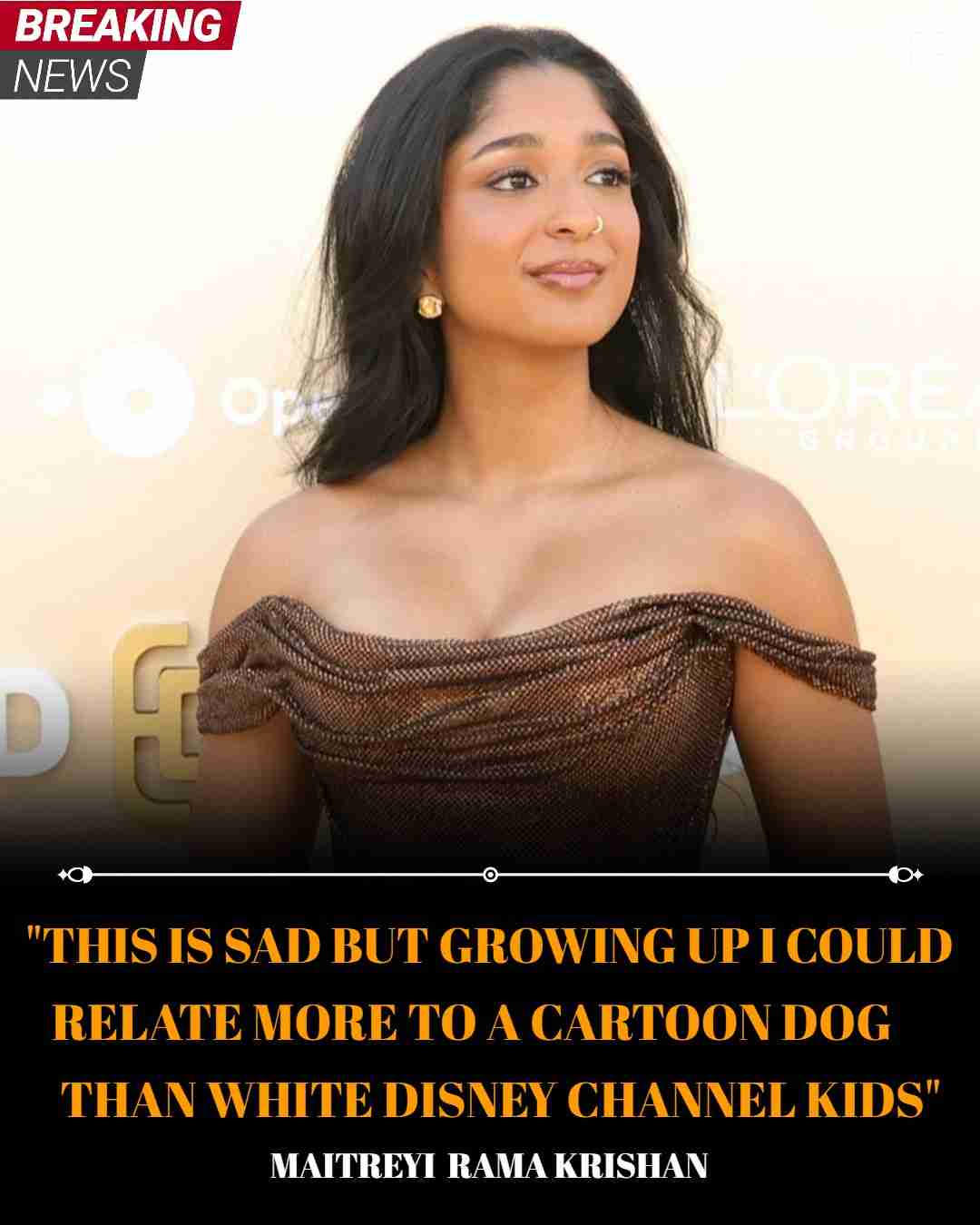
A quote attributed to actress Maitreyi Ramakrishnan has been circulating widely online: “This is sad but growing up I could relate more to a cartoon dog than white Disney Channel kids.”
Whether referencing childhood viewing habits or larger cultural issues, the statement has generated significant conversation about representation in children’s entertainment, diversity in mainstream media, and how young audiences identify with the characters they see on screen.
The viral quote has resonated especially strongly among viewers who grew up feeling underrepresented in popular shows, and it has sparked broader debates about how media images shape identity and belonging during formative years.
The Larger Issue Behind the Quote
At the center of the discussion is the idea that many children of color, including those from immigrant and multicultural backgrounds, grew up watching television that did not reflect their appearance, cultural realities, or lived experiences. For decades, major children’s networks prominently featured white, Western characters, with characters of other backgrounds often relegated to minor roles or stereotypes.
The quote attributed to Ramakrishnan captures a feeling shared by many: that animated characters — even non-human ones — sometimes felt more relatable than human characters who looked different, lived differently, or carried unfamiliar cultural narratives.
This sentiment is not uncommon among younger generations who grew up before the more recent push toward diversity in media. The idea of relating more to a “cartoon dog” than to human characters highlights how powerful representation can be, even when it is absent. It also points to how children instinctively search for emotion, personality, and relatability in the characters they follow, regardless of that character’s species or form.
Why Representation Matters in Children’s Media
Decades of research suggest that representation can significantly shape a child’s sense of identity, self-worth, and social belonging. When children see characters who resemble them or share parts of their cultural background, they are more likely to feel seen, validated, and capable of imagining themselves in a variety of roles.
Key reasons representation matters include:
- Identity Formation
Children often look to media to understand what is “normal,” what is “beautiful,” and what is possible. When certain identities are missing or minimized, children may feel that their own experiences or backgrounds are less valued. - Role Modeling and Aspirations
Seeing characters who resemble them in roles such as scientists, heroes, leaders, and creators can influence a child’s sense of their own potential. - Social Understanding
Representation not only benefits children of underrepresented backgrounds. When diverse characters appear in mainstream media, all children gain exposure to different cultures, experiences, and perspectives. - Emotional Connection
Children form deep emotional bonds with characters. When those characters reflect their world even slightly, the connection can support positive development and self-esteem.
The Evolution of Diversity in Mainstream Entertainment
Over the last decade, major shifts have occurred across television, streaming platforms, and film industries. Newer programs showcase broader casts, culturally diverse storylines, and more intentional inclusion of characters from various backgrounds. The result is a growing catalog of shows in which children of color can see themselves in authentic and meaningful ways.
Examples of these changes include:
- More protagonists of diverse racial and ethnic backgrounds
- Storylines centered on multicultural families
- Characters who speak multiple languages
- Representations of different religious traditions
- Non-stereotypical portrayals of different communities
This progress is gradual and ongoing, but it reflects a real shift in industry priorities.
Why the Quote Resonates Today
The reason the viral comment attributed to Ramakrishnan struck a nerve is that it reflects a shared experience among many millennials and members of Gen Z. Many grew up during a time when media diversity was significantly limited, and relatable characters were rare.
For some viewers, animated characters were easier to identify with because they were less bound to specific racial or cultural identities. A cartoon dog could be silly, misunderstood, emotional, adventurous, or awkward in ways that transcended human categories—and for children seeking connection, those traits mattered more than appearance.
The quote also resonates because it contrasts the simplicity of childhood with the complexity of adulthood. As adults, viewers can look back and understand why certain media felt distant or unrelatable. They can now articulate how structural issues in entertainment shaped their early experiences.
Public Response and Cultural Reflections
The public reaction to the quote has been wide-ranging:
- Many individuals shared similar stories of growing up unable to find characters who resembled them.
- Others highlighted progress, noting that today’s children have access to far more diverse programming.
- Some commentators pointed out ongoing gaps, especially in behind-the-scenes diversity among creators, writers, and executives.
- Fans of Maitreyi Ramakrishnan emphasized how her own visibility now offers representation to many young viewers watching her work.
The conversation also highlights the role of social media in amplifying cultural discussions. A single sentence, whether spoken in an interview or circulating through online posts, can become the catalyst for collective reflection.
The Broader Significance for Today’s Entertainment Industry
The significance of this moment goes beyond one quote. It highlights the ongoing work of creating media ecosystems that reflect the world’s full diversity. While progress has been made, the entertainment industry continues to face challenges in ensuring that representation is not only present, but authentic, respectful, and multidimensional.
Studios, networks, and streaming platforms increasingly recognize that audiences want more than tokenism. They want stories that reflect real lived experiences and characters who embody the complexity of modern life.
Representation has moved from being a “nice to have” to a core expectation.
Conclusion
The quote attributed to Maitreyi Ramakrishnan — saying that she related more to a cartoon dog than to the white Disney Channel characters of her childhood — has opened a thoughtful dialogue about representation in media. Whether discussing the past limitations of children’s programming or the ongoing evolution of entertainment, the public response underscores how deeply media shapes identity from an early age.
The conversation serves as a reminder that representation is not just a matter of casting choices. It is a vital part of how children understand themselves, how they see their place in the world, and how they imagine their futures.