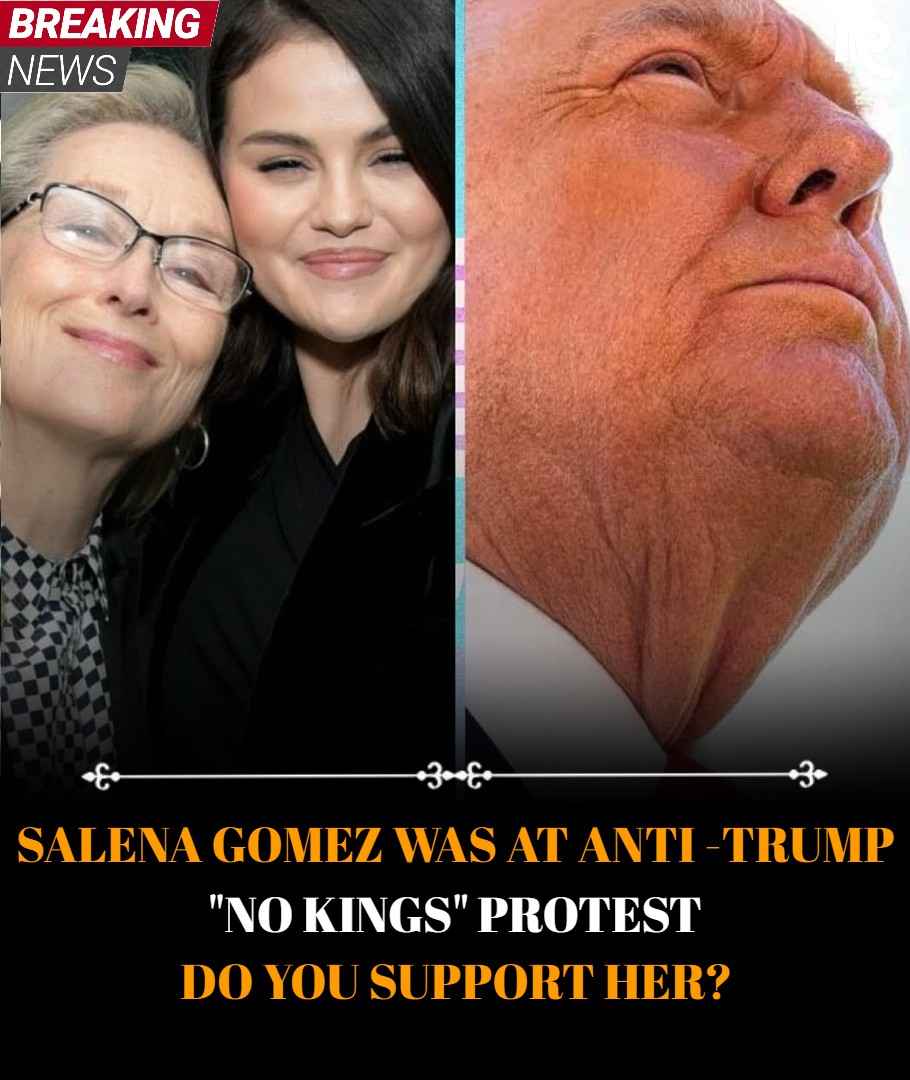
Selena Gomez drew widespread attention after appearing at the recent “No Kings” protest, an event focused on concerns about political power, democratic norms, and the belief that no individual leader should hold disproportionate influence in the United States. Her attendance quickly became a trending topic due to her traditionally low-profile approach to political activism and the public curiosity surrounding her decision to participate.
This article provides a factual, neutral overview of the protest, Gomez’s involvement, and the range of public responses without supporting or opposing any political figure or movement.
Understanding the “No Kings” Protest
The “No Kings” protest was organized as a demonstration centered around the idea that democratic systems rely on checks and balances rather than concentrated authority in any one individual. Participants gathered to express concerns about political power, governance, and the need to maintain strong institutional norms. While many attendees were critical of Donald Trump’s influence, the event also drew individuals with broader concerns about leadership in general, regardless of political affiliation.
The name “No Kings” reflects the protest’s core message: a commitment to representative government rather than perceived political overreach. Speakers and organizers emphasized themes such as constitutional protections, civic responsibility, and the importance of open democratic processes.
Selena Gomez’s Appearance and Its Significance
Selena Gomez is known primarily for her work in entertainment and philanthropy, rather than public political commentary. Her presence at the protest therefore marked a notable departure from her usual public posture, making it an event of interest for fans and observers.
According to those present, Gomez attended quietly, without delivering speeches or making major public statements. Her participation appeared to be personal rather than performative, and she did not use the event to launch a political message of her own. Instead, she was seen engaging with attendees, listening to speakers, and being part of the crowd.
For many observers, her attendance highlighted a broader trend of entertainers becoming more visible in civic movements. For others, it raised questions about the role of celebrities in political activism and how such involvement affects public discourse.
How the Public Responded
The reaction to Gomez’s appearance varied widely, reflecting the broader polarization of political issues in the United States.
Supportive Reactions
Some supporters of the protest viewed her involvement as a sign that influential cultural figures are taking an interest in national issues. They saw her presence as encouragement for younger audiences to pay attention to political developments. Supporters also noted that Gomez, known for her personal privacy, appearing at the protest underscores the seriousness of the concerns being raised.
Also Read: Ireland just elected their 3rd female president in history
Critical Reactions
Critics questioned whether celebrities should play a role in political activism, arguing that high-profile appearances may influence public opinion based on star power rather than informed policy discussion. Others felt that celebrity participation can oversimplify complex issues or contribute to existing divides.
A separate group of critics focused less on Gomez personally and more on the protest itself, arguing that political demonstrations often reflect only a portion of the public’s views and can sometimes amplify tension rather than reduce it.
Neutral and Mixed Reactions
Many observers simply noted her attendance without attributing deeper significance to it. For these individuals, Gomez’s presence was viewed as another example of a public figure engaging in civic expression, something common across all political viewpoints in recent years.
Celebrity Involvement in Political and Social Movements
Selena Gomez’s appearance fits into a broader pattern of rising celebrity involvement in public demonstrations. Over the last decade, entertainers, athletes, and other cultural figures have become increasingly active in political and social issues. This shift has generated both praise for raising awareness and criticism for potentially influencing political narratives through fame rather than expertise.
Experts note that modern activism is often intertwined with online platforms, giving celebrities significant influence simply due to their large followings. However, the impact of such involvement varies and often depends on the issue, the individual, and how they choose to participate.
Gomez’s Broader Public Image
While Selena Gomez has occasionally commented on social issues, she has generally maintained a more private, reserved approach to political matters. Her appearance at the “No Kings” protest does not necessarily indicate a long-term shift in her public activism, as she has not made detailed political statements following the event.
Much of Gomez’s public work has historically centered on mental health advocacy, philanthropy, and humanitarian causes. Whether her protest appearance signals a new direction or simply a one-time expression of personal concern remains unclear.
Conclusion
Selena Gomez’s presence at the “No Kings” protest became a widely discussed moment because it touched on several intersecting themes: celebrity influence, civic participation, public concern about political power, and the evolving role of entertainers in national conversations. Her participation was quiet and personal, yet it drew attention due to her global profile.
Reactions ranged from supportive to critical, illustrating how deeply political events resonate with the public. Regardless of interpretation, her attendance highlights the ongoing conversation about what political involvement looks like in the modern era and the role public figures play in shaping public dialogue.