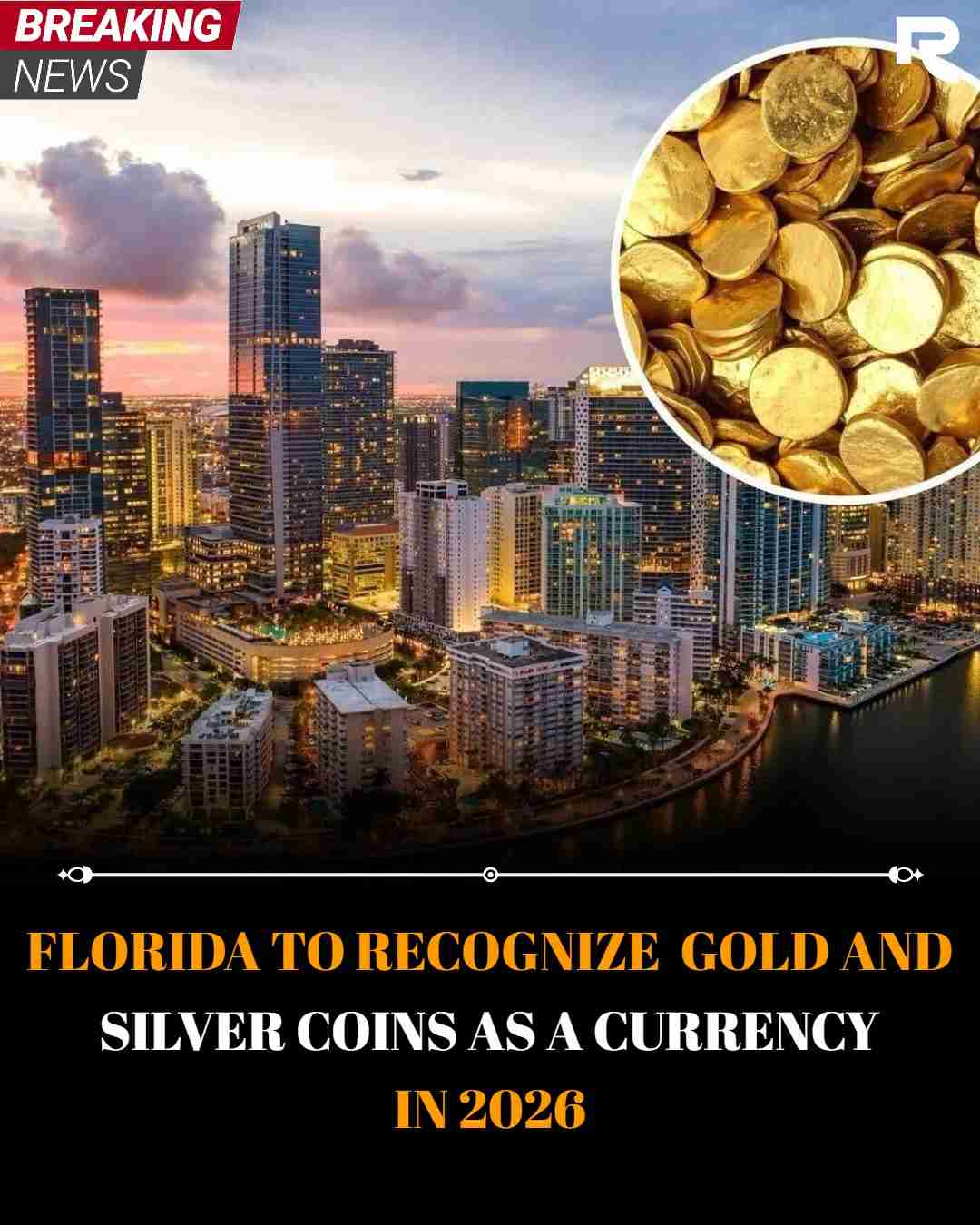
Florida recently passed a groundbreaking law that will officially recognize certain gold and silver coins as legal tender starting in 2026. The legislation creates a framework for how these precious-metal coins can be used in debt payments and other financial transactions, while also addressing regulatory, tax, and implementation issues. This move has sparked interest from both supporters and critics, as it raises important questions about monetary innovation, economic sovereignty, and the practical challenges of using physical assets in modern finance.
Key Provisions of the New Law
Under the newly approved legislation (commonly referred to as HB 999), gold and silver coins that meet strict purity and marking standards will be recognized as legal tender in Florida. The law becomes effective July 1, 2026, contingent on required rules being adopted and ratified. These rules are to be developed by the state’s Chief Financial Officer and the Financial Services Commission.
Definitions and Standards:
- Qualifying gold coins must have a purity of at least 99.5 percent, while silver coins must be at least 99.9 percent pure.
- These coins may take the form of rounds, bars, ingots, or traditional bullion coins.
- Importantly, the law requires that each coin be stamped with its weight and purity, and optionally the identifier of the refiner or mint. Coins may not be marked with any symbol that implies government issuance, other than the refiner’s name or mark.
Optional Acceptance:
- The use of these coins is voluntary. No private individual, business, or government entity is required to accept them.
- For government entities, if they choose to accept gold or silver coins, transactions must occur electronically, not through handing over physical metal. This includes payments for debts, taxes, or fees.
Tax Implications:
- The law provides a sales-tax exemption for qualifying gold and silver coins. That means purchases of these specific coins that meet the purity and marking criteria will not be subject to Florida’s state sales tax.
Regulatory Framework:
- Financial institutions and money services businesses that choose to handle precious-metal accounts or products will need to meet regulatory requirements. These include custodial rules, security and audit standards, insurance, and consumer disclosures.
- Qualified custodians will be licensed to hold gold or silver coins on behalf of customers, and public depositories may be involved for governmental use.
Why Florida Is Making This Change
The push to recognize gold and silver coins reflects a broader movement advocating for “sound money” and financial independence. Supporters of the new law cite several motivations:
- Inflation Hedge
Many proponents see gold and silver as a more stable store of value compared to fiat currency, particularly during periods of inflation or economic uncertainty. By enabling people to transact using these metals, Florida is giving its residents an additional avenue for preserving value. - Economic Sovereignty
Some backers argue that this policy supports financial self-determination, reducing reliance on the federal monetary system and modern banking infrastructure. It’s framed as empowering citizens to use tangible assets to meet financial obligations. - Encouraging Precious Metal Usage
With this law, gold and silver are not just collectible investments—they can also be used in everyday financial interactions (for those willing to participate). This recognition could stimulate interest in precious-metal holdings and related financial services.
Potential Benefits
If successfully implemented, the law offers several possible upsides:
- Greater Financial Options: Floridians can diversify how they hold and use wealth, leaning on precious metals as part of their portfolio.
- Sales Tax Relief: The sales tax exemption for qualifying coins may encourage more people to invest in or use these metals.
- Voluntary Adoption: Since acceptance is not mandatory, individuals and entities can choose whether to engage with this system, reducing risk for those who prefer traditional currency.
- Modern Infrastructure: By requiring electronic transfer systems, the law bridges physical assets (gold/silver) with digital transaction models, making precious metals more practical for everyday use.
Challenges and Criticisms
While the law is ambitious, it raises significant practical and conceptual challenges:
- Volatility and Valuation
The market price of gold and silver can fluctuate widely. This makes everyday transactions potentially unpredictable: determining how much a coin is worth in real time requires a clearly defined pricing system and possibly daily valuation updates. - Business Readiness
For many businesses, accepting precious-metal coins involves costs and logistical challenges—such as verifying purity, securing storage, and accounting for fluctuating metal value. Smaller merchants, especially, may be reluctant to add these burdens. - Limited Physical Transactions
The restriction to electronic transfers for government transactions means physical coins might not be routinely exchanged for state-level payments like taxes or fees. This limits the practicality of using physical gold and silver in public financial transactions. - Counterfeit Risks and Security
Handling bullion coins requires stringent verification and secure storage. There is a risk of counterfeits unless custodians and financial institutions implement robust authentication procedures and storage systems. - Regulatory Complexity
The success of this law depends heavily on the implementing rules that the financial regulators will put in place. If these rules are not ratified properly, the law could be repealed before it even takes effect.
Broader Implications
Florida’s decision could have ripple effects beyond its own borders. It adds to a growing trend of states considering or enacting similar “sound money” proposals. Recognizing gold and silver as legal tender may influence how people think about money, encouraging a return to tangible assets in an era dominated by digital currency and fiat systems.
Economists and legal scholars are watching closely. The law tests the balance between modern financial infrastructure and traditional monetary values. It could set a precedent for other states interested in monetary diversification or strengthening local financial autonomy.
Looking Ahead: Implementation and Adoption
Several key milestones will determine the real-world impact of this law:
- Rule-Making Process: The state’s financial regulators must finalize the rules for implementation and submit them by a specified deadline. The legislature then needs to ratify these rules.
- Adoption by Financial Institutions: Banks and money services businesses must decide whether to offer gold/silver accounts or services under the regulatory framework.
- Public Awareness: The public needs to understand which coins qualify, how to use them for payments, and how value will be calculated during transfers.
- Custodian Infrastructure: Licensed custodians must establish secure storage and verification mechanisms for these precious-metal coins.
Conclusion
Florida’s new law to recognize gold and silver coins as legal tender represents a bold experiment in monetary policy. It aims to combine the timeless appeal of precious metals with the convenience of modern financial systems. The law offers financial freedom, potential inflation protection, and a nod toward economic sovereignty.
However, its success will depend heavily on how well it is implemented—and whether financial institutions, businesses, and individuals embrace the new system. There are significant risks and practical hurdles, from establishing reliable pricing systems to managing security and storage.
As July 2026 approaches, the coming months will be critical. The decisions made now by regulators and industry participants will shape whether gold and silver truly become a functional, usable form of currency in Florida—or remain largely symbolic.